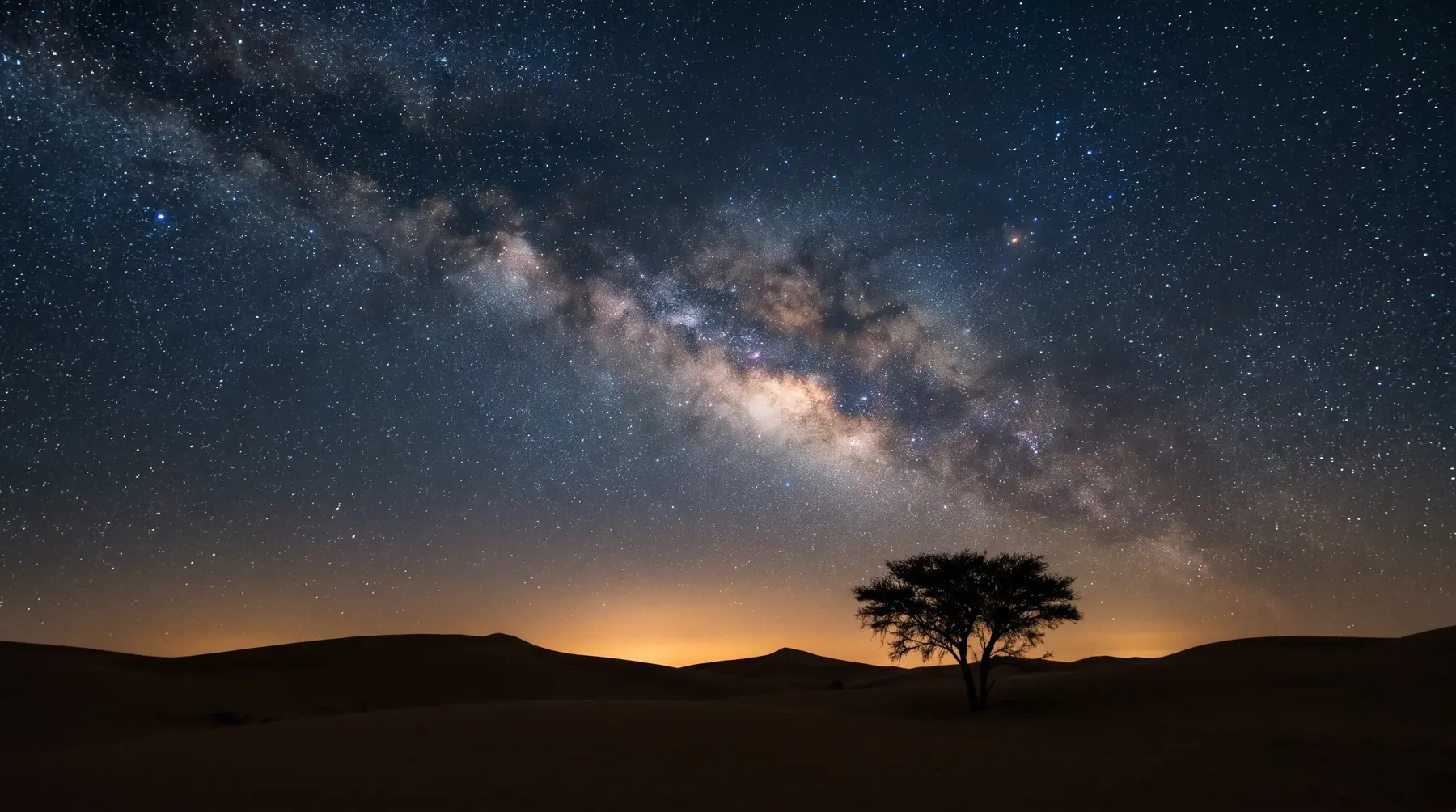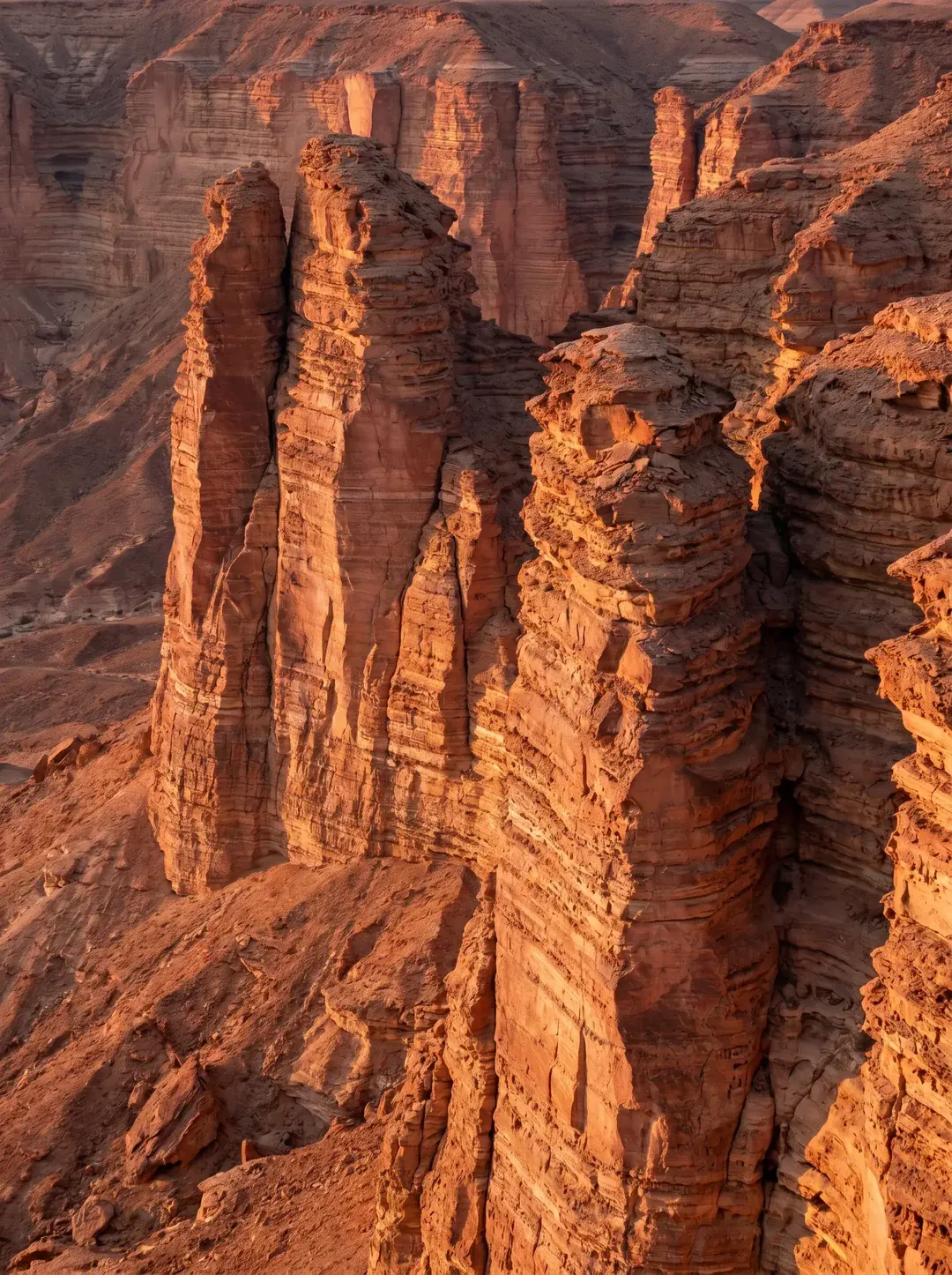
On 17 April 2025, UNESCO announced in Paris that Salma UNESCO Global Geopark in the Hail region and North Riyadh UNESCO Global Geopark in Thadiq Governorate had joined the Global Geoparks Network, the first two geoparks in Saudi Arabia. This guide explains what the designation means, the path every site follows to earn it, and what the two Saudi geoparks protect.
Key facts
- Designated: 17 April 2025, by decision of the UNESCO Executive Board.
- Salma Geopark: 314,500 ha (about 3,145 km²).
- North Riyadh Geopark: 322,100 ha (about 3,221 km²).
- Managing body: the National Center for Vegetation Cover Development and Combating Desertification (NCVC), under the Saudi Geoparks Initiative.
- The global network today: 241 geoparks in 51 countries (UNESCO, April 2026).
What is a UNESCO Global Geopark?
UNESCO defines Global Geoparks as single, unified geographical areas where sites and landscapes of international geological significance are managed with a holistic concept of protection, education and sustainable development. The status does not in itself create new legal protection; it recognises a management model that ties geological heritage to local communities, tourism and education.
UNESCO sets four core requirements:
- Geological heritage of international value, assessed by independent scientific experts.
- A legally recognised management body with a management plan covering the whole area.
- Visibility: a clear identity and outreach to visitors and residents.
- Networking: membership of the Global Geoparks Network is compulsory, together with active cooperation with other geoparks.
How does a site earn the status?
A site must already operate as a de facto geopark for at least one year before applying. The procedure then runs over roughly three years, following the timetable UNESCO publishes:
- Letter of intent: sent by 1 July of year one.
- Application dossier: submitted between 1 October and 30 November of the same year.
- Desktop evaluation: completed by 30 April of year two.
- Field evaluation mission: from 1 May, carried out by two evaluators over at least four days.
- Recommendation of the Global Geoparks Council: in September of year two. The Council may defer an application, giving the site two years to address gaps.
- Decision of the UNESCO Executive Board: at its spring session in year three.
The Saudi geoparks followed this path: the Council recommended both at its 9th session on 8–9 September 2024 in Viet Nam, and the designation followed in April 2025.
Salma UNESCO Global Geopark
Salma lies in the Hail region, about 80 km south-east of Hail city and 112 km north of Buraydah, and covers 314,500 ha. It centres on the Salma Mountains, which extend over more than 60 km² and rise to 1,380 m.
- Geology: volcanic and magmatic rocks of the Arabian Shield dating back over 740 million years. The geopark includes Al-Hutaymah Crater, part of a volcanic field with more than 100 individual vent sites and at least 77 volcanoes.
- Cultural heritage: the historic Darb Zubaydah pilgrimage route between Kufa and Makkah crosses the area, which also holds Faid Oasis with its fortress and 45 wells, and Tabah heritage village, known for ancient desert kites.
- Wildlife: UNESCO lists the Nubian ibex and the Arabian oryx among the species associated with the area.
North Riyadh UNESCO Global Geopark
North Riyadh sits in the foothills of the Tuwaiq mountains in Thadiq Governorate, about 140 km north-west of Riyadh, and covers 322,100 ha. It is still sometimes searched for as "Thadiq Geopark", since its official website and social accounts carry the Thadiq name.
- Geology: tabletop mountains and Jurassic to Cretaceous marine limestone formations, dating from approximately 201 to 66 million years ago, with fossils of shelled marine animals and ancient coral reef systems, notably in Wadi Obaitharan. These rocks are linked to the formations that host Saudi Arabia's petroleum reservoirs.
- Cultural heritage: Thadiq traces its history to tribal settlements over 370 years ago, and the geopark includes heritage villages, historic buildings and a tea museum.
Who manages the geoparks?
Both geoparks are managed by the National Center for Vegetation Cover Development and Combating Desertification (NCVC) under the Saudi Geoparks Initiative. The Saudi National Commission for Education, Culture and Science co-announced the nomination. Each geopark has an official website on the NCVC domain.
What happens after designation?
The status is not automatically permanent. UNESCO revalidates every geopark every four years:
- Green card: the designation continues for another four years.
- Yellow card: management has two years to address the findings.
- Red card: the status is withdrawn if the yellow-card findings are not resolved.
Every geopark therefore needs a living management plan, a system for monitoring the condition of its geosites, education and tourism programmes with measured results, and documentation ready for revalidation missions.
The Rasmala team's experience
Between 2023 and 2025, Rasmala's experts worked on establishing the Kingdom's two UNESCO Global Geoparks, including management plans, site preparation and nomination dossiers, through UNDP for the NCVC. Today we support organisations preparing new nominations or getting ready for revalidation: geological-value assessment, management plans and capacity-building programmes.
How we can help
- Natural and world heritage: geopark applications, site management and protection plans, and capacity-building programmes.
- Ecotourism: visitor-experience and interpretation plans, and community and livelihood programmes.
Guide: the World Heritage nomination process
Sources
- UNESCO, "About UNESCO Global Geoparks" — unesco.org/en/iggp/geoparks/about
- UNESCO, application procedure for UNESCO Global Geoparks — unesco.org/en/iggp/geoparks/proposals
- UNESCO, "UNESCO names 16 new Global Geoparks", 17 April 2025 — unesco.org
- UNESCO, Salma UNESCO Global Geopark — unesco.org/en/iggp/salma-unesco-global-geopark
- UNESCO, North Riyadh UNESCO Global Geopark — unesco.org/en/iggp/north-riyadh-unesco-global-geopark
- UNESCO, "UNESCO names 12 new Global Geoparks", 22 April 2026 — unesco.org
- Saudi Press Agency, geopark designation, 17 April 2025 — spa.gov.sa/en/N2300834
- Saudi Press Agency, Global Geoparks Council recommendation, 11 September 2024 — spa.gov.sa/en/N2169763
- NCVC, Salma Geopark — salmageopark.ncvc.gov.sa
- NCVC, North Riyadh Geopark — northriyadhgeopark.ncvc.gov.sa
Sources checked on 3 October 2026. Figures are quoted as published by their sources.