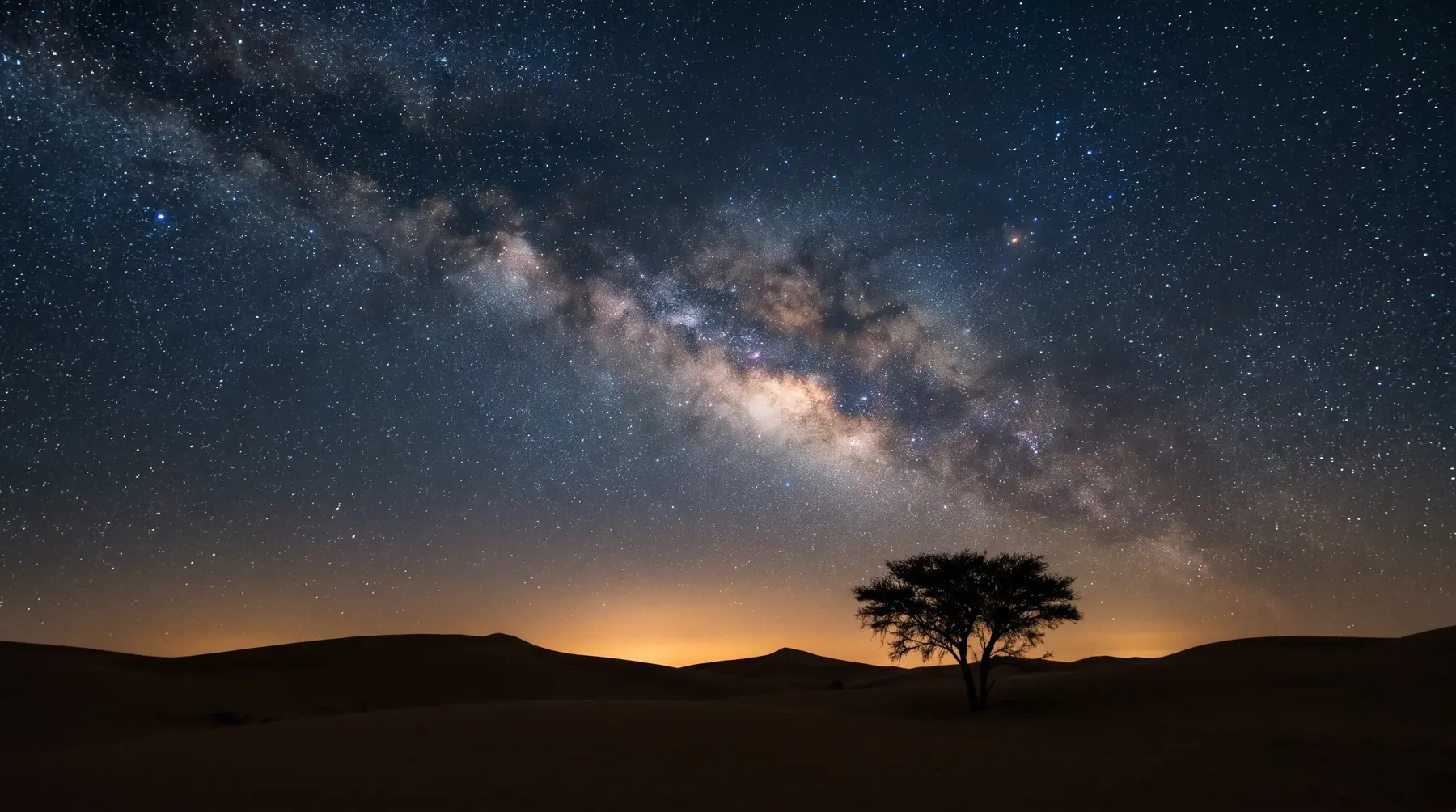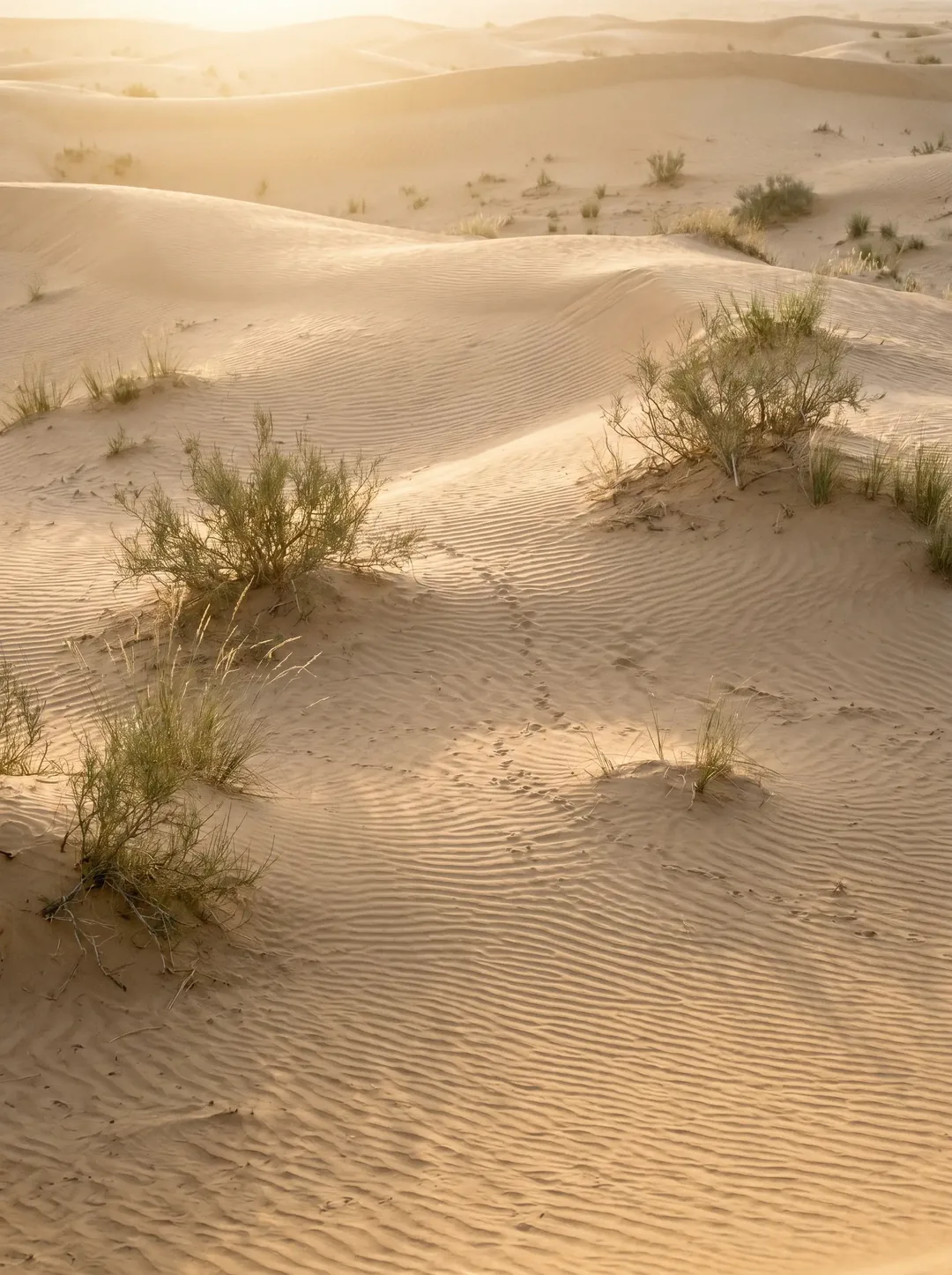
King Khalid Royal Reserve lies north-east of Riyadh, about 80 km from the city centre, and covers 1,162 km² according to its development authority; it is the royal reserve closest to Riyadh and the smallest by area. It is bounded by the Rumahiyah – Hafnah road to the north, the Buwaib road to the east, which separates it from Imam Abdulaziz bin Mohammed Royal Reserve, the Thumamah road to the south and the Tuqi road to the west. Royal approval to convert Thumamah wildland park into a royal reserve was given on 3 Safar 1441 AH (2 October 2019). It is run by the Imam Abdulaziz bin Mohammed Royal Reserve Development Authority (IARDA), a single authority that develops two separate reserves: Imam Abdulaziz bin Mohammed Royal Reserve and King Khalid Royal Reserve.
Key facts
- Location: north-east of Riyadh, about 80 km from the city centre.
- Area: 1,162 km², according to its development authority.
- Boundaries: the Rumahiyah – Hafnah road to the north, the Buwaib road to the east, the Thumamah road to the south and the Tuqi road to the west.
- Managed by: the Imam Abdulaziz bin Mohammed Royal Reserve Development Authority.
- Established: royal approval on 3 Safar 1441 AH (2 October 2019).
- Visiting: by advance booking through a licensed tourism service provider; the authority charges no entry fee.
- Urmah season: October to the end of April.
Where is King Khalid Royal Reserve?
The reserve lies north-east of Riyadh, about 80 km from the city centre. Landmarks named by its development authority include:
- the Al-Urmah plateau;
- the Thumamah fault and Wadi Thumamah;
- Rea'a Al-Thumamah, about 90 km north-east of Riyadh;
- the historic palace of King Khalid.
King Khalid Royal Reserve boundaries
The development authority describes the boundaries by the surrounding roads:
- North: the Rumahiyah – Hafnah road.
- East: the Buwaib road, which separates it from Imam Abdulaziz bin Mohammed Royal Reserve.
- South: the Thumamah road.
- West: the Tuqi road.
The authority publishes an illustrative map of both reserves on its website; we found no downloadable official boundary file.
Formerly Thumamah wildland park
On 3 Safar 1441 AH (2 October 2019), royal approval was given to convert Thumamah park into a royal reserve named King Khalid Royal Reserve, following the royal orders of June 2018 that created the royal reserves. The reserve falls under the Royal Reserves Council, chaired by HRH the Crown Prince.
What does King Khalid Royal Reserve protect?
The reserve protects its natural habitats and their plants and animals, as well as archaeological sites. According to the development authority, these include:
- Plants: the authority lists 195 plant species (183 elsewhere on its site), including thumam grass, arfaj, boxthorn, chamomile, acacia, sidr and arta.
- Animals: including the Arabian oryx, sand gazelle (reem), mountain gazelle (idmi) and red fox.
- Reptiles and birds: reptiles include the qadi al-jabal lizard and the spotted gecko; resident and migratory birds include the crested lark, the eastern bee-eater, the kestrel and the rock dove.
- Habitats and heritage: four natural habitats and 32 archaeological sites according to the authority, with traces of human presence going back about 8,000 years, Thamudic inscriptions from the 5th to 3rd centuries BC, and rock art of ibex.
Bringing wildlife back
- March 2022: 20 Arabian oryx and 30 sand gazelles released with the National Center for Wildlife.
- December 2025: 61 animals released, including sand gazelles, oryx, wild hares and mountain gazelles.
- April 2026: more than 200 volunteers planted more than 500 native seedlings over three days.
- September 2026: more than 140 spiny-tailed lizards (dhub) released.
The authority recorded 15 births in the reserve up to the middle of the second quarter of 2026. A release is usually preceded by a reintroduction feasibility study and followed by monitoring of the released animals and their breeding.
How to visit
According to the frequently asked questions on the development authority's website:
- Booking: visits require advance booking through a licensed tourism service provider, who issues the entry permit and supervises the visit.
- Fees: the authority charges no entry fee; providers may charge for their activities.
- Camping: only through licensed providers. Self-camping at Kasr Al-Muzairi' is in Imam Abdulaziz bin Mohammed Royal Reserve, not King Khalid.
- Season: the Urmah season runs from October to the end of April.
- Providers: the authority publishes an official list of licensed operators on its Urmah season page. Its ecotourism platform is for licensing operators, not for visitor bookings.
Visitor rules: no hunting; stay on marked tracks and keep to 40 km/h on paved roads; light fires only in designated places away from vegetation; do not harm plants or animals; take your waste with you; and keep noise and lighting low. Violations are penalised under the Environmental Law.
Frequently asked questions about King Khalid Royal Reserve
Where is King Khalid Royal Reserve?
North-east of Riyadh, about 80 km from the city centre, and it took in the former Thumamah wildland park.
How large is King Khalid Royal Reserve?
It covers 1,162 km² according to the Imam Abdulaziz bin Mohammed Royal Reserve Development Authority. Saudipedia gives 720 km², most likely the former park's area.
What are the boundaries of King Khalid Royal Reserve?
The Rumahiyah – Hafnah road to the north, the Buwaib road to the east, which separates it from Imam Abdulaziz bin Mohammed Royal Reserve, the Thumamah road to the south and the Tuqi road to the west.
Who manages King Khalid Royal Reserve?
The Imam Abdulaziz bin Mohammed Royal Reserve Development Authority, which develops both Imam Abdulaziz bin Mohammed Royal Reserve and King Khalid Royal Reserve.
Is there an entry fee for King Khalid Royal Reserve?
The authority charges no entry fee, but visits require advance booking through a licensed tourism service provider, who may charge for its activities.
The Rasmala team's experience
Rasmala's experts, independently or as consultants and specialists to major international consultancies, delivered the strategies and integrated management plans for Imam Abdulaziz bin Mohammed and King Khalid Royal Reserves (2022–2025).
How we can help
- Nature reserve management: strategies and integrated management plans, and standard operating procedures for reserve operations.
- Nature and biodiversity conservation: reintroduction feasibility studies and release plans, and habitat restoration with native plants.
- Ecotourism: operator guides, carrying-capacity studies and visitor management for a reserve close to a large city.
- Environmental management and monitoring: indicators for monitoring released species and their breeding, and state-of-environment reports.
We offer these services to development authorities and to organisations planning activities or projects inside or next to the reserve; for a reserve whose visits run through licensed operators, ecotourism planning is the closest fit. Rasmala does not issue entry permits or book visits; those sit with the authority and its licensed providers. To discuss a project, contact the Rasmala team.
Guide to Saudi Arabia's Royal Reserves · King Abdulaziz Royal Reserve · King Salman bin Abdulaziz Royal Reserve
Sources
- Imam Abdulaziz bin Mohammed Royal Reserve Development Authority, FAQs — iarda.gov.sa
- IARDA, home page and authority page — iarda.gov.sa/authority
- IARDA, Urmah season and licensed operators — iarda.gov.sa/urmah-season
- IARDA, 61 animals released in King Khalid Royal Reserve, December 2025 — iarda.gov.sa
- IARDA, tree-planting event with more than 200 volunteers, April 2026 — iarda.gov.sa
- IARDA, more than 140 spiny-tailed lizards released, September 2026 — iarda.gov.sa
- Saudipedia, King Khalid Royal Reserve (royal approval date and 2022 release) — saudipedia.com
Sources checked on 13 October 2026; source 1 checked again on 5 November 2026. We use the development authority's area (1,162 km²); Saudipedia gives 720 km², most likely the former park's area. Visiting procedures can change, so check the authority's website before you go.